Table of Contents
- GPS Tracking
- Fleet Telematics
- Fleet Management Software
- Which Solution Is Right for Your Business?
- 1. Data Collection
- 2. Data Transmission
- 3. Cloud Processing
- 4. Actionable Insights
- OBD-II Trackers
- Hardwired GPS Trackers
- Battery-Powered GPS Asset Trackers
- Reduce Fuel Costs
- Improve Driver Safety
- Deliver Better Customer Service
- Protect Vehicles and Equipment
- Automate Preventative Maintenance
- Increase Fleet Utilization
- Construction
- HVAC, Plumbing & Electrical
- Landscaping
- Transportation & Trucking
- Municipal Government
- Hospitals & Healthcare
- Airports
- Agriculture
- What is fleet telematics?
- Is fleet telematics only for large fleets?
- Can telematics reduce insurance costs?
- Can I track trailers and equipment?
- Is telematics difficult to install?
- Ready to Modernize Your Fleet?
Everything You Need to Know About Fleet Telematics, GPS Tracking, Connected Vehicles and Modern Fleet Management
Fleet telematics has evolved from a simple way to locate vehicles into one of the most valuable technologies available to businesses that operate cars, trucks, vans, heavy equipment and mobile assets. Modern telematics systems combine GPS tracking, vehicle diagnostics, driver behaviour monitoring, AI-powered analytics, dashcams and cloud software to give organizations complete visibility over their operations.
Whether you manage five service vans or five hundred commercial vehicles, telematics can help reduce operating costs, improve customer service, increase driver safety and make better business decisions based on real-time data.
In this comprehensive guide, we'll explain everything you need to know about fleet telematics, how it works, the different technologies available, and how businesses across Canada and North America are using it to improve efficiency.
GPS Tracking vs. Fleet Telematics vs. Fleet Management
Although these terms are often used interchangeably, they describe different levels of fleet technology. Understanding the differences will help you choose the right solution for your business.
Feature | GPS Tracking | Fleet Telematics | Fleet Management Software |
Live Vehicle Location | ✓ | ✓ | ✓ |
Trip History | ✓ | ✓ | ✓ |
Geofences & Alerts | ✓ | ✓ | ✓ |
Vehicle Diagnostics | — | ✓ | Often Integrated |
Fuel Usage Monitoring | — | ✓ | ✓ |
Driver Behaviour Monitoring | — | ✓ | ✓ |
AI Dashcam Integration | — | ✓ | ✓ |
Preventative Maintenance | Limited | ✓ | ✓ |
Dispatch & Scheduling | Limited | Limited | ✓ |
Work Orders & Maintenance | — | Limited | ✓ |
Reporting & Analytics | Basic | Advanced | Advanced |
Asset Tracking | Limited | ✓ | ✓ |
Mobile Apps | ✓ | ✓ | ✓ |
Software Integrations | Limited | ✓ | ✓ |
GPS Tracking
GPS tracking is designed to answer one simple question:
"Where are my vehicles or assets?"
A GPS tracking system provides:
Live vehicle locations
Trip history
Geofence alerts
Speeding alerts
Arrival and departure notifications
For some businesses, GPS tracking alone may be enough to improve dispatching and recover stolen vehicles.
Fleet Telematics
Fleet telematics builds on GPS tracking by collecting operational data directly from the vehicle and connected devices.
Telematics can monitor:
Engine diagnostics
Odometer readings
Idle time
Driver behaviour
Vehicle health
AI dashcam events
Maintenance schedules
Equipment utilization
Battery voltage
PTO activity
Rather than simply knowing where a vehicle is, telematics helps you understand how efficiently it is being operated.
Fleet Management Software
Fleet management software sits above telematics.
It uses telematics data while also helping organizations manage:
Work orders
Driver & vehicles information
Compliance
Scheduling
Fuel management
Reporting & analytics
Operating costs
Dispatch & driver communications
Management & driver apps
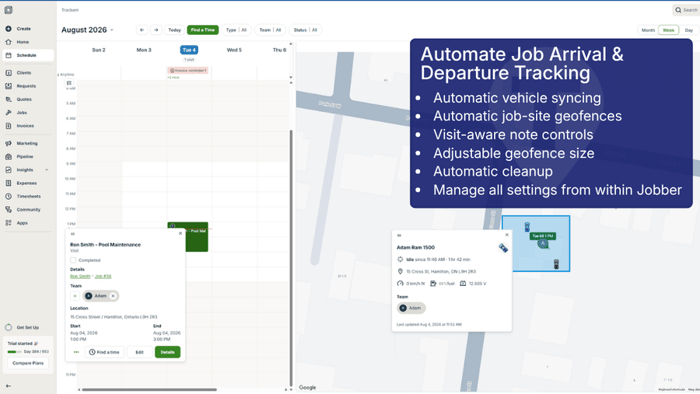
Many organizations integrate their telematics platform with business software such as Jobber, accounting systems, dispatch software and ERP platforms.
Which Solution Is Right for Your Business?
Your Goal | Recommended Solution |
Know where vehicles are | GPS Tracking |
Reduce fuel costs | Fleet Telematics |
Improve driver safety | Fleet Telematics |
Manage maintenance | Fleet Telematics |
Run an entire fleet operation | Fleet Management Software + Fleet Telematics |
Track trailers & equipment | GPS Asset Tracking |
Improve dispatching | Fleet Telematics with Scheduling Integration |
What Is Fleet Telematics?
Fleet telematics is the technology used to collect, transmit and analyze information from vehicles and mobile assets.
A telematics system combines technologies including:
GPS satellites
Cellular IoT communications
Vehicle diagnostic data (OBD-II or CAN Bus)
Accelerometers
Cloud software
Mobile applications
AI-powered analytics
AI-Dashcams
Unlike traditional GPS tracking, telematics doesn't simply answer "Where is my vehicle?"
It answers questions like:
Is the vehicle idling excessively?
How much fuel is being consumed?
Is maintenance overdue?
Is the driver speeding?
Which technician is closest to the next job?
Which assets are underutilized?
Which drivers need coaching?
The result is a safer, more efficient and more profitable fleet.
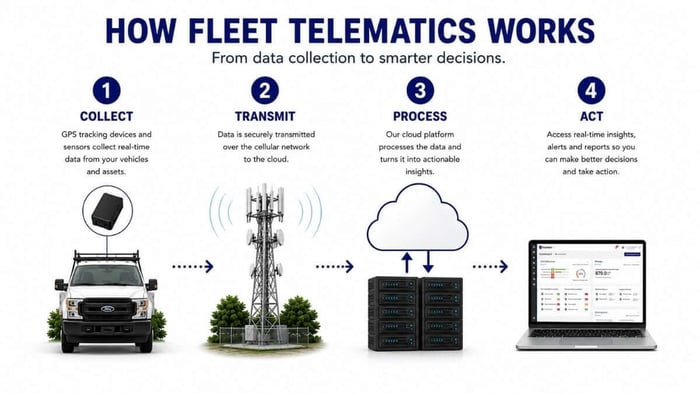
How Fleet Telematics Works
Every telematics system follows four basic steps.
1. Data Collection
A GPS tracking device is installed in a vehicle or attached to an asset.
Depending on the hardware, it may collect:
GPS location
Speed
Ignition status
Engine hours
Odometer
Fuel usage
Battery voltage
Harsh braking
Harsh acceleration
Cornering
Idle time
PTO activity
Temperature
Driver identification
2. Data Transmission
Generally GPS trackers contain cellular SIM cards, which securely transmit GPS and telematics data over cellular IoT networks to cloud servers.
3. Cloud Processing
The software processes thousands of data points onto maps, into dashboards, alerts and reports accessible from desktop computers, tablets and smartphones.
4. Actionable Insights
Fleet managers use this information to improve productivity, safety, maintenance and customer service.
Types of GPS Tracking Devices
OBD-II Trackers
All passenger vehicles built after 1996 have an OBDII port. OBDII GPS trackers provide advantages that include quick installation, fuel monitoring, and odometer mileage reporting directly from the vehicle's ECM. These trackers plug easily into the OBDII port or can be hidden under the dashboard by using a Y-cable.
Best for:
Fleets of passenger cars, vans, SUVs, trucks, and EVs
Sales team vehicles
School board maintenance vehicles
Delivery vans
Landscape trucks
HVAC, electrical or plumbing vans
Taxi or ride-share fleets
Police fleets
Cleaning company cars
etc.
Hardwired GPS Trackers
Hardwired GPS trackers can be wired into power, ground, ignition, as well as available analog and digital inputs and outputs, like a siren, plow, or other PTO. Other more simple to deploy hard wired devices simply attach to the power and ground of the onboard 12-48v battery.
Best for:
Commercial fleets
Heavy trucks
Construction equipment
Utility fleets
Municipal vehicles
Heavy equipment
Advantages include hidden installation, reliable power, and expanded monitoring capabilities for CAN bus, PTOs, and BLE sensor connectivity.
Battery-Powered GPS Asset Trackers
Modern wireless, battery-powered GPS trackers often combine GPS, Wi-Fi positioning, and cellular location technology for visibility both outdoors and indoors. These trackers can use common AA or AAA batteries, with the ability to last over 10 years on one set of batteries. Other portable wireless trackers can be rechargeable and magnetic.
Ideal for:
Containers
Portable assets
Job boxes
Manlifts & forklifts
Lawn & landscape equipment
Industrial floor cleaners
Modern wireless trackers often combine GPS, Wi-Fi positioning and cellular location technology for visibility both outdoors and indoors.
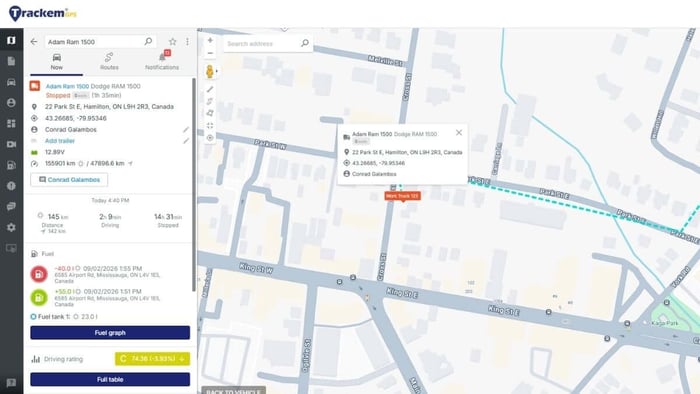
What Information Can Fleet Telematics Collect?
Modern telematics platforms can monitor hundreds of data points.
Vehicle Data
GPS location
Speed
Engine hours
Ignition
Odometer
Battery voltage
Driver Behaviour
Speeding
Harsh braking
Aggressive acceleration & cornering
Seatbelt compliance
Distracted driving
Mobile phone use
Fatigue detection
Fuel Management
Fuel consumption
Fuel economy
Idle time
Unauthorized vehicle use
Maintenance
Oil changes
Service intervals
Diagnostic fault codes
Preventative maintenance reminders
Asset Tracking
Equipment location
Trailer movements
Utilization
Unauthorized movement alerts
Geofence notifications
The Business Benefits of Fleet Telematics
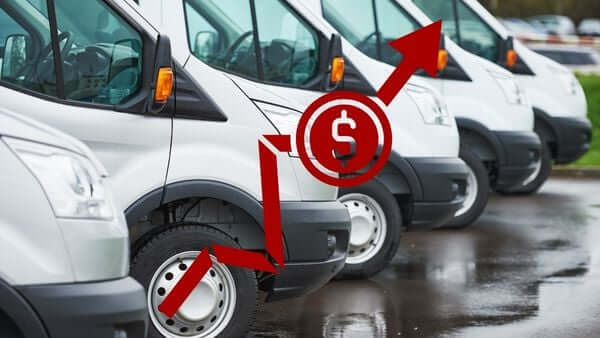
Reduce Fuel Costs
Fuel accounts for 20-30% of a business fleet’s total operating costs, making it one of the largest operating expenses for most fleets
Telematics helps reduce fuel costs by identifying:
Excessive idling
Speeding
Inefficient routing
Unauthorized vehicle use
Harsh driving behaviours
Given the increase in fuel prices since 2025, even small improvements in driving behaviour can result in substantial annual operational cost savings.
Improve Driver Safety
Driver scorecards and AI dashcams help reduce risky driving while encouraging better habits.
Modern AI dashcams can detect:
Distracted driving
Cell phone use
Drowsiness
Smoking
Seatbelt violations
Unsafe following distances
Some systems also provide in-cab voice coaching to help drivers correct unsafe behaviours in real time, while other systems can provide driver coaching though automated AI emails sent to drivers to correct suboptimal driving habits.
Deliver Better Customer Service
Knowing where every vehicle is allows dispatchers to:
Send the nearest technician
Improve arrival time estimates
Reduce missed appointments
Complete more jobs each day
Provide location links to customers
Protect Vehicles and Equipment
GPS tracking helps businesses recover stolen vehicles, trailers and equipment faster through:
Instant movement alerts
Geofence notifications
Recovery mode
After-hours monitoring
Movement alerts
GPS device tamper alerts
Location link sharing for law enforcement
Automate Preventative Maintenance
Maintenance reminders based on kilometres, engine hours or calendar dates reduce unexpected breakdowns while extending vehicle life. Send automated alerts to technicians, who may or may not be users of the telematics system, about upcoming, current or overdue maintenance. Fleet managers can see a snapshot of maintenance tasks for individual vehicles or across the fleet.
Increase Fleet Utilization
Telematics helps identify underused vehicles and equipment so organizations can maximize existing assets before purchasing more. By analyzing peak usage trends and identifying underperforming assets, managers can make informed decisions about rightsizing their fleet or reallocating vehicles to high-demand areas. Additionally, eliminating redundant or idle assets significantly reduces unnecessary maintenance, insurance, and licensing costs, maximizing the overall return on investment.
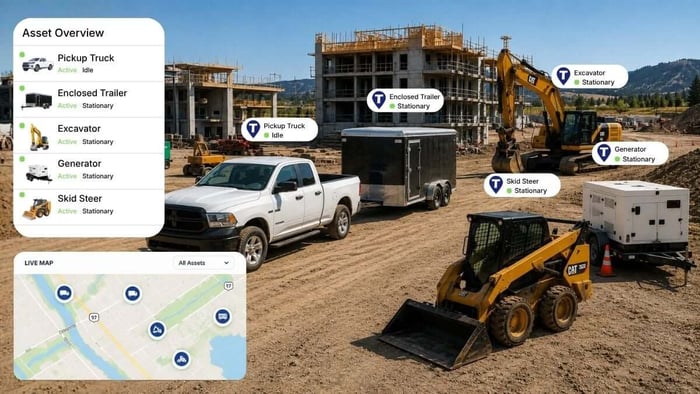
Fleet Telematics Across Different Industries
Construction
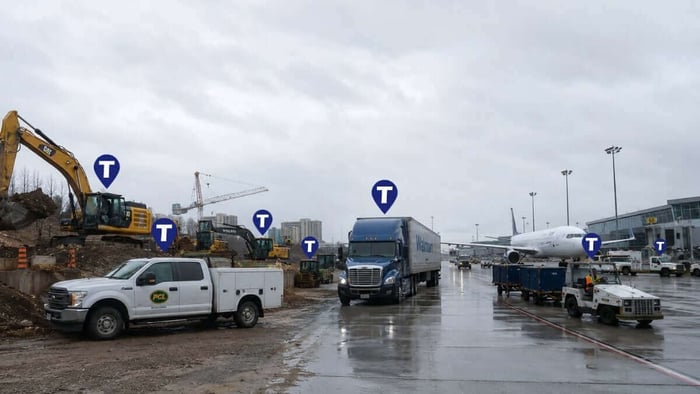
Track trucks, trailers, heavy equipment and valuable tools while monitoring engine hours and job-site arrivals and departures to know accurate working times .
HVAC, Plumbing & Electrical
Improve dispatching, verify arrival times, reduce fuel costs and automate customer billing.
Landscaping
Optimize routes, know what jobsite critical business assets are at and monitor seasonal equipment and equipment that is in storage.
Transportation & Trucking
Monitor tractors, trailers, reefer temperatures and driver performance. Track the tractor and the trailer separately for redundant theft protection.
Municipal Government
Manage public works vehicles, emergency services, snowplows, buses, service fleets and all forms of equipment in one software system.
Hospitals & Healthcare
Track wheelchairs, beds and gurneys, maintenance carts, utility vehicles and other mobile assets both indoors and outdoors.
Airports
Monitor ground support equipment, luggage dollies, transport chairs, baggage carts, fuel trucks, tow tractors and maintenance vehicles, inside the terminal, maintenance and cargo buildings or outside on the apron.
Agriculture
Track tractors, combines, irrigation equipment, trailers,and other valuable farm assets on the farm and track your trucks and reefers, including real-time temperature monitoring while delivering to market.
Choosing the Right Fleet Telematics Provider
Before selecting a provider, ask:
Is the platform cloud-based?
Are mobile apps included?
Does it integrate with our existing software?
What reports are available?
Is installation available?
Is customer support local?
Can the solution scale with our fleet?
Are there hidden fees?
Does it support AI dashcams?
Can it track both vehicles and assets?
Can we track assets inside and outside?
Do cellular networks matter?
The best solution is one that combines reliable hardware, intuitive software and responsive customer support.
Frequently Asked Questions
What is fleet telematics?
Fleet telematics combines GPS tracking, vehicle diagnostics and cloud software to help businesses monitor and manage vehicles, drivers and assets in real time.
Is fleet telematics only for large fleets?
No. Even businesses with five vehicles often achieve measurable savings through better routing, reduced fuel consumption and improved maintenance.
Can telematics reduce insurance costs?
Many insurers recognize the value of safer driving practices and AI dashcams as part of fleet risk management programs.
Can I track trailers and equipment?
Yes. Battery-powered GPS asset trackers make it easy to monitor trailers, generators, heavy equipment and other valuable assets.
Is telematics difficult to install?
Most systems offer several hardware options, including plug-and-play OBD devices, professionally installed hardwired trackers and wireless battery-powered asset trackers.
Why Businesses Choose Trackem GPS
Since 2004, Trackem GPS has helped organizations across Canada and North America gain complete visibility over their fleets, equipment and mobile assets.
Our cloud-based platform combines:
Real-time GPS fleet tracking
Fleet telematics
AI-powered dashcams
Wireless asset tracking
Indoor Wi-Fi positioning
Advanced reporting
Mobile apps
Software integrations
BLE sensor monitoring
Flexible and even custom data/service plans
Canadian-based customer support
Whether you manage service vehicles, construction equipment, trailers, airport ground support equipment or hospital assets, Trackem GPS provides scalable solutions that improve efficiency, reduce operating costs and protect valuable assets.
Ready to Modernize Your Fleet?
If you're looking to reduce fuel costs, improve driver safety, automate maintenance and gain complete visibility into your fleet, Trackem GPS can help.
Book a free demonstration today and discover how Trackem GPS can transform your fleet operations.