Table of Contents
- Fuel prices are high—and rising fast
- The biggest fuel cost problem is often the one you don’t see
- Real-time alerts: turning bad habits into immediate action
- Asset utilization: making sure the right vehicles are doing the right work
- Going beyond movement: real fuel data with OBD tracking
- Fast deployment means faster savings
- Maintenance: one of the most overlooked drivers of fuel efficiency
- Bringing it all together with the Trackem Maintenance Module
- Final thought: control what you can
- FAQs
Fuel prices are putting pressure on virtually every business that relies on vehicles, mobile crews, or equipment in the field. What used to be a manageable operating cost has quickly become a major threat to margins, especially as prices rise faster than most businesses can adjust.
Every service call, delivery, or jobsite visit now carries a higher cost. And because fuel impacts so many parts of an operation, the effects are widespread—touching scheduling, dispatching, pricing, and overall profitability.
That’s why businesses are no longer just watching fuel prices—they’re actively looking for ways to offset them.
And increasingly, they’re finding that the fastest path to relief is not external.
It’s operational.
GPS tracking has become one of the most effective ways to reduce fuel costs immediately, because it exposes the everyday inefficiencies that quietly drive fuel spend higher—and gives businesses the tools to correct them in real time.
Fuel prices are high—and rising fast
Across both Canada and the United States, fuel prices have surged in a short period of time. In the U.S., gas prices have pushed back above $4 per gallon, while diesel has climbed even higher. In Canada, many regions are seeing prices approach or exceed $2.00 per litre.
These are not slow, manageable increases. They are sharp spikes that immediately impact operating costs across entire fleets.
And the bigger issue is not just where prices are today—it’s the uncertainty around where they’re going. Market volatility, global supply pressures, and geopolitical instability all point to continued fluctuations, not a quick return to lower, stable pricing.
For businesses, that means waiting for relief is not a reliable strategy.
The biggest fuel cost problem is often the one you don’t see
Rising prices are only part of the issue. The other part is how much fuel is already being wasted inside day-to-day operations.
"Its simple. For many businesses given the increasing gas and diesel prices, fuel is a leading operational cost. That is not going to change. However, there are tools available to bring down that cost significantly. GPS tracking and telematics is one of those tools and it works," says Alex Simms, COO at Trackem GPS.
Most businesses are losing fuel through small, repeated inefficiencies that are easy to overlook but expensive over time. And one of the biggest contributors—often underestimated—is excessive idling.
Vehicles sitting with engines running at jobsites, outside offices, or between stops may seem harmless in the moment. But idling burns fuel continuously without generating any value. Across a fleet, those minutes turn into hours—and those hours turn into significant cost.
Combine that with other common behaviors:
unnecessary speeding that increases fuel consumption
harsh acceleration that burns more fuel than smooth driving
inconsistent driving habits that reduce overall efficiency
…and the impact becomes even more significant.

Real-time alerts: turning bad habits into immediate action
What makes GPS tracking so powerful is not just visibility—it’s the ability to act in real time.
With Trackem GPS, fleet managers and business owners can receive instant alerts when fuel-wasting behavior occurs. That means problems are no longer discovered after the fact—they can be addressed as they happen.
For example, you can be alerted when:
a vehicle is idling beyond a set threshold
a driver exceeds efficient speed ranges
harsh acceleration or aggressive driving is detected
This creates immediate accountability across your fleet. Drivers become more aware of their habits, and managers can coach and correct behavior before it turns into ongoing fuel waste.
Over time, this leads to smoother driving, reduced idle time, and measurable fuel savings.
Asset utilization: making sure the right vehicles are doing the right work
Another major—and often overlooked—factor in fuel efficiency is how your fleet is being used overall.
Even if individual vehicles are operating efficiently, fuel can still be wasted if the fleet itself is not being utilized optimally. Some vehicles may be overused while others sit idle. Jobs may be assigned inefficiently, increasing travel time and distance. Equipment may be deployed in ways that create unnecessary movement.
With the Trackem GPS platform, businesses gain visibility into asset utilization across their fleet. This makes it possible to:
identify underutilized vehicles and redistribute workloads
assign the closest and most appropriate asset to each job
reduce unnecessary trips and overlapping routes
balance usage across the fleet
When fleets are utilized properly, total distance driven decreases, unnecessary engine hours are reduced, and fuel consumption becomes more efficient overall.
Going beyond movement: real fuel data with OBD tracking
While tracking behavior and utilization is critical, understanding actual fuel consumption takes things even further.
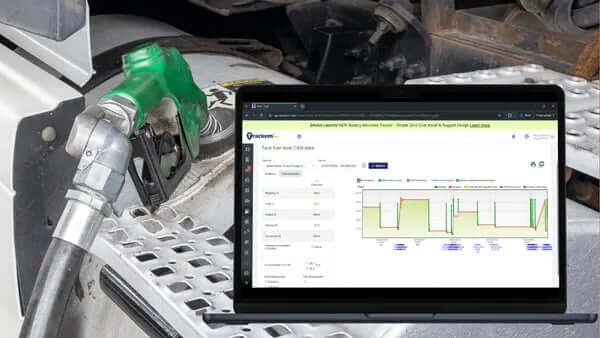
Trackem’s OBD GPS Tracker connects directly to the vehicle’s ECM (engine control module), giving you real-time fuel and mileage data straight from the vehicle itself. This allows fleet managers to see exactly how much fuel is being used—not just estimate it based on activity.
With this level of insight, businesses can:
monitor fuel consumption in real time
correlate driving behavior with actual fuel usage
generate detailed reports and analytics
identify trends and inefficiencies with precision
This transforms fuel management from reactive to proactive, giving businesses the ability to continuously optimize performance.
Fast deployment means faster savings
Even with all these capabilities, none of it matters if implementation is slow or complicated.
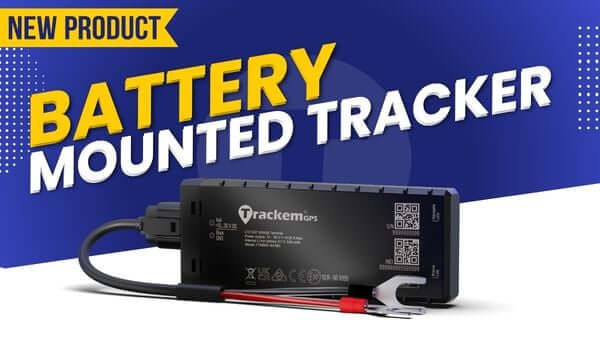
That’s why the Trackem Battery Mounted GPS Tracker is such an important part of the overall solution.
It installs in minutes by connecting directly to any 10–30V battery, requires no complex wiring, and is built with an IP69 weather-rated design to handle harsh environments. It can be used across vehicles, trailers, and equipment, making it highly flexible for mixed fleets.
And because it is free to deploy, businesses can start gaining visibility without the friction of upfront costs.
In a market where fuel prices are rising quickly, that speed matters.
Maintenance: one of the most overlooked drivers of fuel efficiency
While behavior and visibility are critical, there is another major factor that directly impacts fuel consumption: vehicle maintenance.
Poorly maintained vehicles are almost always less fuel efficient. Something as simple as underinflated tires or overdue oil changes can significantly increase fuel usage over time.
Regular, preventive maintenance plays a major role in keeping fuel consumption under control. This includes:
oil changes to maintain engine efficiency
tire rotations and proper tire pressure
air filter replacements for optimal airflow
engine diagnostics to detect inefficiencies early
fuel system cleaning to maintain performance
alignment checks to reduce drag and resistance
These are not just maintenance tasks—they are fuel-saving strategies.
Bringing it all together with the Trackem Maintenance Module
The Trackem GPS Maintenance Module ensures that maintenance is not left to chance.
It allows businesses to schedule, log, and manage routine and preventive maintenance across both management and technicians, ensuring vehicles remain in peak condition.
With it, you can:
automate maintenance schedules based on time or mileage
track service history across your fleet
assign and manage tasks for technicians
receive alerts for upcoming maintenance
The result is a fleet that is more reliable, more efficient, and significantly more fuel-conscious.
Final thought: control what you can
Fuel prices are high, they have risen quickly, and they are likely to remain volatile. That is not something businesses can control.
But how efficiently fuel is used—that is entirely within their control.
With Trackem GPS, real-time alerts for idling and driving behavior, deeper fuel insights through the OBD GPS Tracker, optimized deployment through asset utilization tracking, and improved efficiency through the Maintenance Module, businesses have a complete toolkit to reduce fuel costs from every angle.
And with the Battery Mounted Tracker, they can implement it quickly and start seeing results almost immediately.
Because in today’s environment, the businesses that succeed will not be the ones waiting for fuel prices to drop.
They will be the ones who take control of their operations—and their fuel costs—today.
FAQs
How does GPS tracking help reduce fuel consumption during price surges?
GPS tracking addresses hidden operational inefficiencies by alerting managers to excessive idling, speeding, and harsh acceleration in real time, allowing teams to curb fuel-wasting driver behavior immediately.
What role does asset utilization play in reducing fleet fuel expenses?
Proper asset utilization gives visibility into how vehicles and equipment are deployed. It allows dispatchers to assign the closest asset to a job, eliminate overlapping routes, and rebalance workloads across underutilized vehicles to reduce unnecessary mileage.
How does an OBD GPS tracker provide deeper fuel insights than standard tracking?
An OBD tracker connects directly to the vehicle's Engine Control Module (ECM) to pull actual fuel consumption and mileage data. This provides exact fuel usage analytics rather than estimations based purely on driving activity.
Why is regular vehicle maintenance considered a fuel-saving strategy?
Poorly maintained vehicles burn significantly more fuel. Routine checks—such as tire inflation, oil changes, air filter replacements, and alignment checks—reduce engine drag and maintain optimal operational efficiency.
How quickly can a business deploy Trackem GPS to start saving on fuel?
Trackem’s Battery Mounted GPS Tracker connects directly to any 10–30V battery in minutes with no complex wiring required. Because it features an IP69 weather rating and involves no upfront setup friction, fleets can begin tracking and cutting fuel waste almost immediately.
Battery-Mounted GPS Tracker

$149.95
The Battery-Mounted GPS Tracker installs quickly by connecting directly to any 10–30v vehicle battery using simple U-type terminals—no complex ignition wiring required. Its IP69K-rated rugged housing resists dust, high-pressure water, and extreme temperatures from -30 °C to +85 °C for reliable performance in harsh environments. The… read more