Table of Contents
- Practical construction fleet and equipment visibility across changing project locations
- Where Is the Equipment? Managing a Mixed Fleet Across Jobsites
- Coordinating Equipment Transfers and Vehicle Dispatch
- Five Questions to Answer Before Moving Equipment to Another Jobsite
- Monitoring Equipment After Hours
- What Changes During Canadian Winter Operations?
- Maintenance and Equipment Readiness Across a Mixed Fleet
- Choosing the Right GPS Tracking for Heavy Civil Contractors Approach for Different Assets
- See How Trackem Can Outfit GPS for Heavy Civil Contractors
- FAQs
Practical construction fleet and equipment visibility across changing project locations
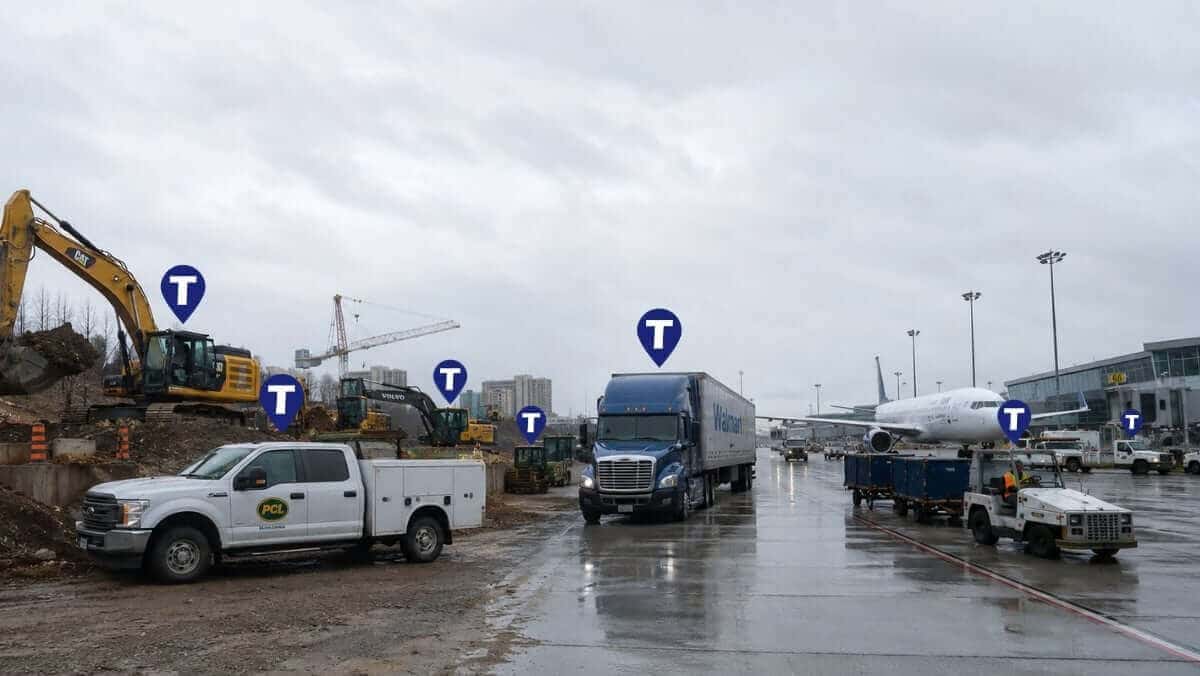
A road crew needs a roller tomorrow morning. The equipment manager believes one is at the grading site, but the foreperson says it moved to another project. An excavator also needs transporting, and a trailer is missing from the yard list. For heavy civil contractors, a simple assignment can begin with the time-consuming question: where is the equipment? With trucks, excavators, loaders and rollers spread across changing sites, GPS tracking for heavy civil contractors gives managers a shared view of reported locations. It can narrow the search before they call a crew, approve a transfer or plan the next assignment.
Where Is the Equipment? Managing a Mixed Fleet Across Jobsites
Dump trucks move between aggregate pits and jobsites while excavators and loaders remain on site for days. Rollers, trailers, and smaller machines may change locations without the office list being updated. Construction equipment GPS tracking helps establish where equipment has been reported, giving managers a starting point beyond memory and spreadsheets.
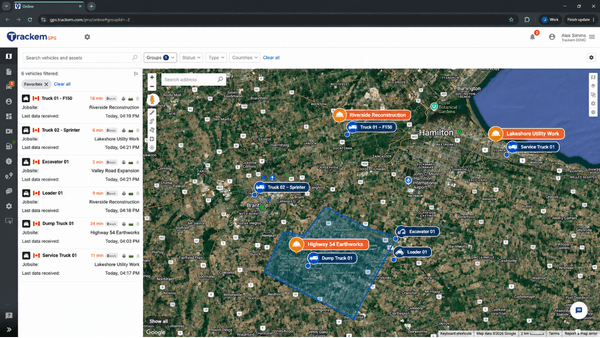
Trackem location views and history can help civil construction teams check where tracked vehicles were last reported and which sites they visited. A shared record helps identify the right crew to contact, plan a potential transfer, and account for vehicles returning to the yard. Location update frequency depends on the tracker, the asset type, and the GPS data/service arrangement.
Coordinating Equipment Transfers and Vehicle Dispatch
A machine appearing at a completed jobsite may still be reserved or awaiting service. Knowing its reported location, however, makes the next call more specific and the allocation discussion more productive.
Say the paving crew needs a compact roller at a new roadwork site. The equipment manager checks reported locations, finds one at a grading project, confirms its availability with that foreperson and schedules transport. GPS tracking for heavy civil contractors provides visibility that can help dispatchers coordinate trucks between sites without replacing crew-level planning or approval.
Five Questions to Answer Before Moving Equipment to Another Jobsite
1. Where was the machine last reported, and how recent is that update?
2. Who is responsible for it at the current site?
3. Is it released from the current task and ready for transport?
4. Are service, inspection, and transport requirements covered?
5. Who will confirm its arrival and update the equipment assignment?
Monitoring Equipment After Hours
Equipment often stays at open jobsites after crews leave. Trackem geofences and movement notifications, where supported and configured, can draw attention to a vehicle leaving a designated site or moving after hours. Security can be notified in real time, and temporary location links can be provided to law enforcement if necessary. Location history helps supervisors review activity and decide whether to follow up.
Alerts support awareness, not physical theft prevention or guaranteed recovery. Legitimate transfers and maintenance can trigger notifications too. Alert timing and availability depend on the device, connectivity, and setup.
What Changes During Canadian Winter Operations?
GPS tracking for heavy civil contractors in Canada and the northern US face uneven winter workloads. Some earthmoving and roadbuilding projects pause, while other crews handle utilities, emergency work or snow-related services. Equipment may remain at a seasonal site as trucks and staff rotate among active projects.
A machine that has stayed in one place for weeks may be properly staged, or its last recorded location may no longer match the office list. When weather changes project schedules, checking locations and relevant alerts alongside crew updates helps managers organize equipment between active and inactive sites.
Seasonal storage and weather disruptions make these questions especially visible in winter, but the same coordination challenges continue year-round.
Maintenance and Equipment Readiness Across a Mixed Fleet
Before assigning a machine, managers need to confirm its condition and readiness. Trackem supports fleet maintenance reminders and repair-cost records for supported fleet setups. These records can help coordinate service across vehicles and sites.
GPS location does not prove a machine is ready to work. Engine hours, mileage, age, certification expiries, diagnostic faults, fuel levels and other machine data require suitable connections and configuration. Actual inspections and maintenance records remain essential.
Choosing the Right GPS Tracking for Heavy Civil Contractors Approach for Different Assets
Effective jobsite equipment tracking starts with matching tracker type to the asset, not assuming every machine reports the same data.
Highway vehicles
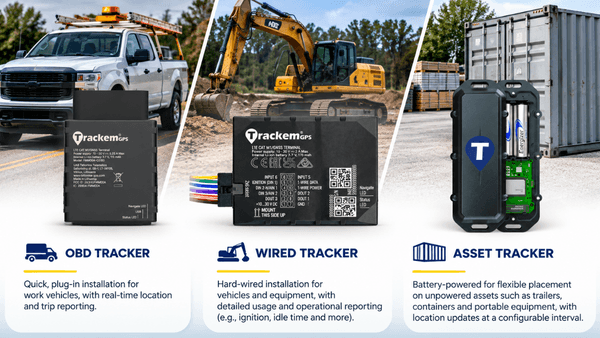
Compatible passenger vehicles, pickups, vans and service vehicles may use plug-in OBD II devices; other commercial trucks may need wired GPS trackers. Confirm the vehicle, power connections and data/reporting needs first.
Powered construction machinery
Excavators, rollers, dozers, and loaders often require installed, externally powered tracking. Power, mounting and environmental conditions matter, and detailed engine or PTO/accessory data require specific connections.
Trailers and unpowered assets
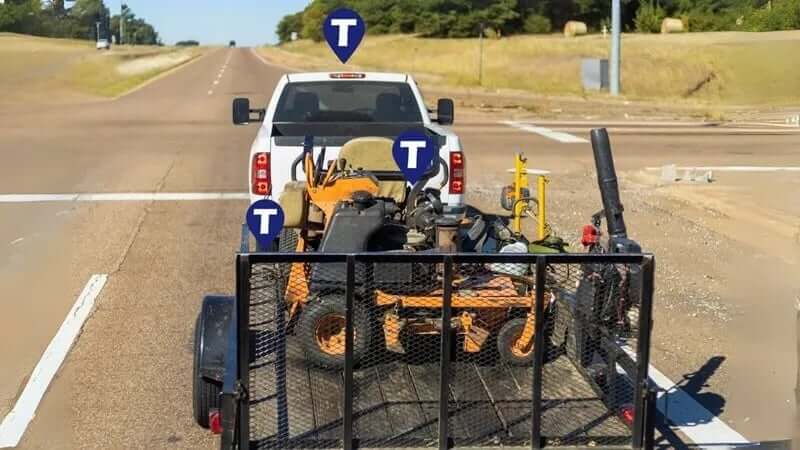
GPS tracking for heavy civil contractors often involves unpowered trailers and portable assets like generators that may suit battery-powered trackers with scheduled GPS location updates. Their update patterns and available features can differ from vehicle trackers.
See How Trackem Can Outfit GPS for Heavy Civil Contractors
Managing several jobsites means managing different questions: which site has the roller, which truck can make the next move, and what equipment should be checked before dispatch? A useful demo should start with those real decisions, not a generic feature list.
See working Trackem hardware and software in a no-obligation demonstration. We can walk through reported locations, history and relevant alerts, then discuss which tracker and reporting approach makes sense for your trucks, machinery and unpowered assets. Bring a sample equipment list or a recent transfer challenge. Explore Trackem's construction GPS tracking solutions, or click here to book a no-obligation demo.
FAQs
Can one GPS tracking system show trucks and construction equipment at several jobsites?
Trackem provides vehicle and asset visibility on its GPS tracking and telematics platform. Reported data and update frequency depend on the devices and service setup.
Can GPS tell me whether an excavator is working?
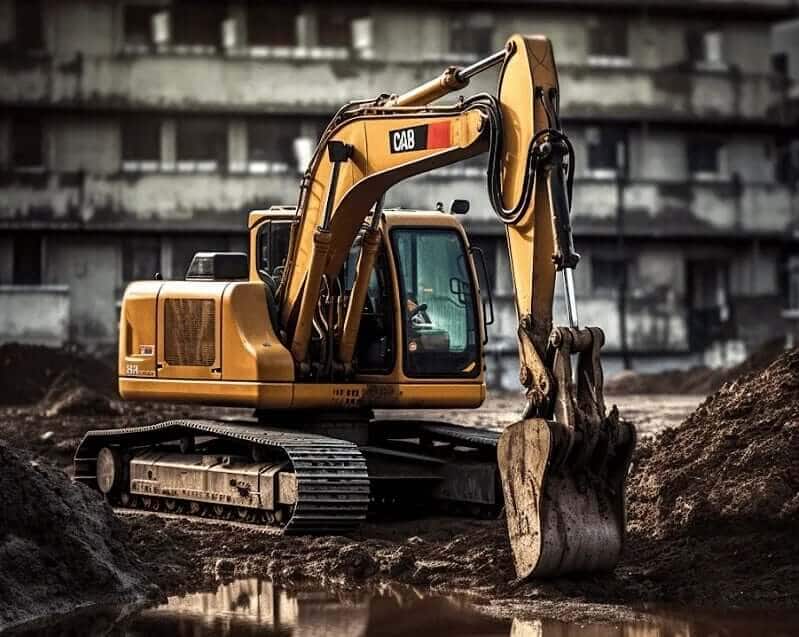
GPS location alone cannot confirm an excavator is operating. Engine hours or other machine data need compatible hardware and configuration. With a Trackem Wired GPS Tracker, hard wired into ignition, Trackem can tell you if a machine is running. In fact, a real-time alert can be sent when the excavator is turned on or off.
Can I set an alert when equipment leaves a jobsite?
Geofence entry and exit alerts are available for supported Trackem configurations when the appropriate boundaries, devices and notifications have been set up. Alerts can be set for entry and exit onto or from a jobsite, and reports generated and scheduled for job times or durations inside a geofence or jobsite, for individual business assets.